
Pt. Shiv Sharma-
Pandit Shiv Sharma was an extremely popular Ayurvedic physician in Bombay; He was a great orator both in English and Hindi and worked skillfully for promotion of Ayurveda among the educated society, politicians and policy makers. He was a member of the parliament and was responsible for placing the CCRIM&H bills in Parliament and getting passed, thus providing Ayurveda the real official status as a system of medicine. He was President of Ayurved Mahasammelana for a number of years and played commendable role in protecting the interests of Ayurveda and Ayurveda practitioners.
Padmabhushan Pandit Satya Narayan Shastri, was an unique example of the knowledge of Ayurveda supported by the intensive knowledge of Sanskrit. He was of the strong view that Ayurveda can not be properly understood without the knowledge of these supportive subjects. Pt. Shastri primarily became an eminent scholar of Sanskrit learning and then studied Ayurveda with Kaviraj Dharma Das. By dint of his merit, he became president of Kashi Vidvat parishad, an organization of scholars of Varanasi. On the request of MahaMana Pt. Madan Mohan Malviya, the founder of Banaras Hindu University, he joined the university in the Ayurvedic section, of the faculty of oriental learning and theology on 20th August 1925, and continued as teacher in Ayurvedic College, Teaching Kayachikitsa (Internal Medicine) and Padarth vigyan (Basic Principle). In, 1938 he became principal of the Ayurvedic College. He was not only the scholarly teacher but also a renowned physician. Who distinguished in the field by his deep knowledge in diagnosis and treatment of diseases. He was specialist in Nadi Pariksha (Pulse diagnosis). After his retirement from BHU 1950, he became the personal physician to Dr, Rajendra Prasad, the first President of India, and subsequently appointed as the first honorary physician to the president of India after independence and was honored with Padambhushan in 1955.
Padmabhushan Pandit Satya Narayan Shastri-
He also served as principal of Govt. Ayurvedic College, located at Sampurnanad Sanskrit University for a number of years. Shastri ji commendably raised the status of true Ayurvedic practitioners of his time.
Prof. C. Dwarakanath-
Prof. C. Dwarakanath was born at Tanjavur district of Madras State in 1906. After his early education, joined the School of Indian Medicine, Madras and oriented the LIM Diploma. The personality of the then Principal, Capt. G Srinivasamurthy, infused in him the spirits of scientific enquiry in to the doctrines of Ayurveda. After a brief spell of service as lecturer at the same institution, he secured the Alexander Von Humboldt Research Scholarship – A German Foundation and went to Hamburg to conduct original research on “Gold Therapy in Tuberculosis” and obtained the ZT Diploma from the University.
In 1947 he was appointed by the Govt. of India as the secretary to the Chopra Committee. This gave him an opportunity to come in contact with innumerable scholars, organizers and eminent personalities in the field of Indian Medicine. The excellent report of the Chopra Committee testifies to his penmanship and also to his insight into the subject. In 1949, he was transferred to Mysore as the principal of the Govt. College of Indian Medicine. He set an example to the other staff members by working hard in and out of class hours and his erudite lectures, have given the Ayurvedic profession the three volumes on Fundamental Principles of Ayurveda.
After a continuous service of seven years as the principal at Mysore, he resigned the post and went to Jamnagar to take up the Professorship in Kayachikitsa at the Post Graduate Institute of Ayurveda established by Govt. of India. His lectures at the Institute were published as two books Introduction to Kayachikitsa and Digestion and Metabolism in Ayurveda. All his books present the ancient doctrines of Ayurveda in terms of modern science which could be easily grasped by the modern medical scientists and research workers. Considering his scholarship and experience, Central Govt. appointed him as its adviser on Indigenous Systems of Medicine in 1959. Uniformity in Ayurvedic Education, Standardization of Medicines, Conduct of Research, Improvement of conditions of practitioners of Indian Medicine and other problems were effectively tackled by him.
In 1965, the Govt. of USSR (Russia) requested his guidance to setup an Indian Medicine wing in one of the Medical Research Centres in that Country. Accordingly he went to Russia as an Ayurvedic Expert. His lectures delivered there won great appreciation by scientists of that country. In 1967, after his retirement from the post of Advisor, appointed as Special Officer, Indigenous Research under the Indian Council of Medical Research.
Padmabhushan Pandit Satya Narayan Shastri, was an unique example of the knowledge of Ayurveda supported by the intensive knowledge of Sanskrit. He was of the strong view that Ayurveda can not be properly understood without the knowledge of these supportive subjects. Pt. Shastri primarily became an eminent scholar of Sanskrit learning and then studied Ayurveda with Kaviraj Dharma Das. By dint of his merit, he became president of Kashi Vidvat parishad, an organization of scholars of Varanasi. On the request of MahaMana Pt. Madan Mohan Malviya, the founder of Banaras Hindu University, he joined the university in the Ayurvedic section, of the faculty of oriental learning and theology on 20th August 1925, and continued as teacher in Ayurvedic College, Teaching Kayachikitsa (Internal Medicine) and Padarth vigyan (Basic Principle). In, 1938 he became principal of the Ayurvedic College. He was not only the scholarly teacher but also a renowned physician. Who distinguished in the field by his deep knowledge in diagnosis and treatment of diseases. He was specialist in Nadi Pariksha (Pulse diagnosis). After his retirement from BHU 1950, he became the personal physician to Dr, Rajendra Prasad, the first President of India, and subsequently appointed as the first honorary physician to the president of India after independence and was honored with Padambhushan in 1955.

Padmabhushan Pandit Satya Narayan Shastri-
He also served as principal of Govt. Ayurvedic College, located at Sampurnanad Sanskrit University for a number of years. Shastri ji commendably raised the status of true Ayurvedic practitioners of his time.
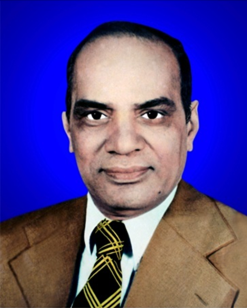
Padmashree Prof. K. N. Udupa-
Padmashree Prof. Katil Narasimha Udupa born on July 28, 1920 in an orthodox Brahmin family of Katil in Karnataka, after early schooling in Chennai graduated in Ayurveda with modern medicine and surgery from Banaras Hindu University in 1944. He did M.S. and FRCS from USA and Canada, worked as surgical assistant and as medical scientist at Horward Medical School where he conducted original research on wound healing for which he is internationally known. He served initially as Civil Surgeon in Himachal Pradesh for several years before being appointed chairman of the famous Udupa committee on ISM by Government of India in 1958. Joined BHU as Professor of surgery and Principal of the then Ayurvedic College in 1959, which was later converted in to college of medical sciences in 1960, and as institute of medical sciences in 1976. Dr. Udupa served as Principal/ Director of IMS, BHU for 20 years continuously and also became Rector and acting V.C. of BHU twice, in 1967 and again in 1981. Dr. Udupa worked life long to promote research in Ayurveda and is considered the father of scientific research in Ayurveda and is greatly responsible for the mainstreaming movement in Ayurveda. After superannuation in 1980 he was appointed life long Professor Emeritus at BHU and remained active till his sad demise in July1992 due to Cancer Colon. He produced 50 PhD’s under his guidance and succeeded to establish one of the finest institutes of medical education in university setup at BHU, where Ayurvedic medicine and modern medicine flourished under one roof.
Padamshree Dr. P. K. Warrier is a reputed Ayurvedic physician of present time. He is the chief physician and managing trustee of Aryavaidyashala, Kottakkal, Kerala. Dr. Warrier is a rare blend of clinical skill, scholarship, and service to humanity. He is largely responsible for growth of Aryavaidyashala and Aryavaidya Pharmacy, which is one of the largest and most respected centers of Ayurvedic service in India. This center helped enormously in raising the image of Ayurved and its credibility nationally and internationally. Dr. P. K. Warrier is a rare example of simple living high thinking and value based professional service. He also served as the president of Ayurved mahasammelana.

Padamshree Dr. P. K. Warrier
Padam Vibhushan Brihaspati Dev Triguna
Brihaspati Dev Triguna (1920–2013) was a Vaidya or Ayurveda practitioner and an expert in Pulse diagnosis (Nadi vaidyam in Ayurvedic terms). He completed his formal ayurvedic studies under the guidance of Rajvaidya Pandit Gokul Chand ji in his Gurukul from Ludhiana.
He was awarded the Padma Bhushan in 1992, followed by the Indian Government’s second highest civilian award, the Padma Vibhushan Award in 2003. Triguna was president of the All-India Ayurvedic Congress and held several government positions, including Director of the Central Council for Research on Ayurveda and chairman of the National Academy of Ayurveda. He was the personal physician for the President of India.[3] He worked towards standardization of Ayurvedic medicines, certifications at the Ayurvedic colleges of India.
Triguna collaborated with Maharishi Mahesh Yogi and other Ayurvedic experts to develop Maharishi Ayurveda. His primary practice was in Sarai Kale Khan behind Delhi’s Hazrat Nizamuddin Railway Station, although he travelled to many parts of the world, including Europe where he opened Ayurveda clinics. His travel in the U.S. included giving talks on Ayurveda at medical schools such as UCLA, Harvard, and Johns Hopkins School of Medicine. In 2003, Triguna received the second highest civilian award given by Government of India, the Padma Vibhushan Award. Vaidya Brihaspati Dev Triguna died on 1 January 2013[8] at his home in Sarai Kale Khan, Nizamuddin New Delhi. His sons Narendra Triguna and Vaidya Devendra Triguna carry on his practice at the same location.